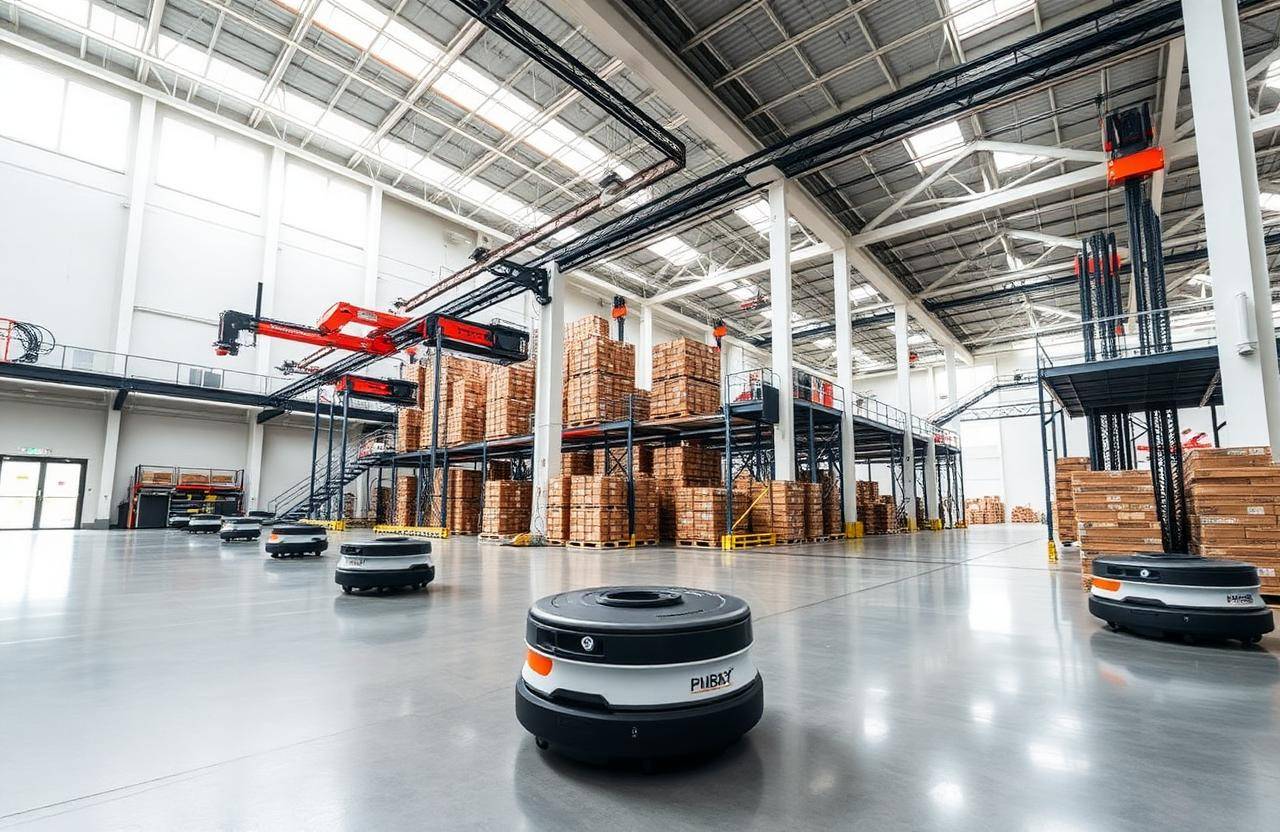
Industrial Real Estate Trends 2026: How Automation Is Reshaping Warehouse Demand
Industrial real estate trends 2026 are being shaped by a powerful mix of automation, labor shortages, and shifting supply dynamics. As warehouse operators adapt to faster fulfillment expectations and more complex technology requirements, demand is increasingly concentrated in modern buildings that can support new systems and layouts.
That shift is one of the biggest themes in the current industrial market report landscape. Automation is not reducing the need for space; in many cases, it is increasing warehouse demand by requiring flatter floors, higher clear heights, wider column spacing, and stronger power infrastructure.
Automation Is Driving New Demand
One of the most important industrial real estate trends 2026 is the growing influence of automation on site selection and building design. Tenants are looking for facilities that can support robotics, AI-enabled systems, and faster internal product movement, which makes newer warehouses more attractive than older stock.
For investors, this creates a clear divide in the market. Properties that can support warehouse automation are commanding stronger rents, longer lease terms, and higher tenant retention, while buildings that cannot be easily retrofitted may face greater leasing pressure.
Rents, Vacancies, and Supply
The latest industrial market report shows that national industrial rents remain resilient even as vacancy rises in some markets. That combination suggests a more selective environment, where high-quality assets continue to outperform while older properties compete more aggressively for tenants.
Another key part of industrial real estate trends 2026 is the way new supply is interacting with demand. In several markets, new construction is still being absorbed by tenants that need modern functionality, which supports continued interest in well-located assets and industrial investment opportunities with long-term potential.
Regional Market Activity
Industrial real estate trends 2026 are not playing out evenly across the country. Markets with strong logistics infrastructure, access to labor, and proximity to ports or major transportation corridors are better positioned to capture tenant demand and investment capital.
At the same time, warehouse demand is proving especially strong in locations where automation-ready buildings are limited. That is helping newer facilities maintain pricing power, while older buildings in slower-growth markets may need repositioning or capital investment to stay competitive.
What Investors Should Watch
For investors, the current industrial market report environment points to a simple takeaway: modern specifications matter more than ever. Buildings with the right clear height, floor strength, power access, and layout flexibility are likely to remain the most desirable assets as automation adoption expands.
The broader industrial real estate trends 2026 story is also about selectivity. Investors who focus on assets aligned with warehouse automation and long-term tenant requirements are more likely to find durable industrial investment opportunities in a market that is becoming increasingly specialized.
Final Takeaway
Industrial real estate trends 2026 show that the sector is evolving, not slowing down. As warehouse demand shifts toward modern, automation-friendly space, investors and owners who understand these changes will be better positioned to identify the strongest opportunities.
The bottom line is that automation is not replacing industrial real estate — it is redefining it. And in this environment, the best assets are the ones built for what comes next.
Looking for your next industrial or commercial investment opportunity? Contact Gulf Coast Property Group at (850) 203-5788 or submit your details here to join our investor network.