
CRE Pulse: Refinancing Pressure, Multifamily Recovery & Fort Walton Beach CRE Trends
After a turbulent stretch, key CRE indicators are finally showing signs of stabilization — but the picture is far from uniform. Rent collections at indie-operated multifamily properties are improving, small-business confidence remains subdued, and a massive wave of loan maturities is forcing lenders to tighten terms. Regional winners (industrial- and retail-led secondary markets) are attracting capital while office continues to lag. Across sectors, the theme is clear: the cycle is shifting from broad optimism to disciplined, selective decision-making.
Multifamily Update
Rent Check Revival: Indie Landlords Finally Catching a Breather
Independent landlords just got a small, but much-needed, win. After a rough 2024 and shaky start to 2025, rent collections are finally trending in the right direction. According to Chandan Economics, 84.5% of renters at independently operated properties paid on time in May 2026, marking another month of steady improvement.
But before landlords start popping champagne corks, there's still a catch: late payments remain stubbornly high. Forecast late-payment rates hit 12.6% in May, only slightly better than the 13.5% peak earlier this year. Translation? Many renters are eventually paying, but they're cutting it real close.
The regional divide is also impossible to ignore. States like Alaska, Hawaii, and Colorado are leading the pack with stellar payment rates north of 92%, while parts of the South and Midwest continue to feel the squeeze. Smaller properties, especially 2–4 family rentals, are outperforming larger multifamily buildings, proving once again that small operators can stay surprisingly resilient.
Why This Matters
Independent landlords don't have giant REIT balance sheets to cushion delayed rent checks. One late payment can throw off mortgages, maintenance, taxes, and cash flow faster than you can say "property insurance premium." For now, the market is stabilizing, but nobody's calling it "normal" just yet.
Small Business & Demand
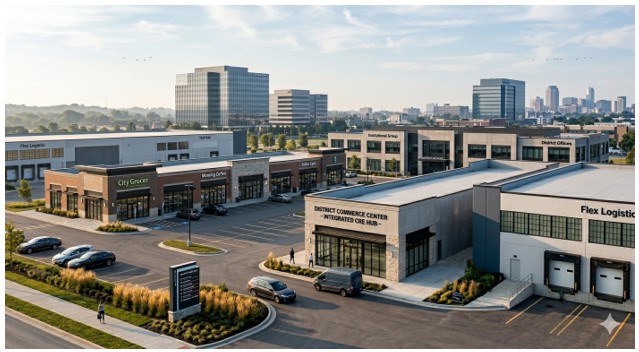
NFIB Optimism Index Barely Moves…But Confidence Is Running on Fumes
America's small businesses are sending a pretty clear message right now: "We're nervous, and no, we're not buying new office chairs."
The latest report from the National Federation of Independent Business showed its Small Business Optimism Index ticking up just 0.1 points in April to 95.9, still below the long-term average of 98.0. Translation? Main Street isn't exactly throwing a party.
And under the hood, the numbers look even shakier. Expectations for future business conditions dropped 7 points to their weakest level since late 2024. Expansion plans cooled, actual sales slipped further into negative territory, and capital spending activity has fallen sharply since January. Basically, small business owners are looking around the economy like someone just said "group project" out loud.
Meanwhile, inflation anxiety is making an unwelcome comeback. The share of owners raising prices surged to 30%, more than double the historical norm, as borrowing costs climbed to 8.3%. Add stubborn labor shortages to the mix, and operators are getting squeezed from both ends.
Why This Matters
For commercial real estate, this isn't just background noise. Small businesses are simultaneously scaling back leasing, hiring, and investment plans — three things landlords very much enjoy seeing happen in reverse.
That slowdown could hit neighborhood retail, small office footprints, and light industrial flex spaces particularly hard in the second half of 2026. Less capital spending means weaker owner-user demand, while tighter credit conditions may leave smaller tenants boxed out of expansion altogether.
In other words: the "wait-and-see" economy has officially renewed its lease.
Debt & Refinancing
The Commercial Real Estate Maturity Wall Has Arrived — and Refinancing Is No Longer Guaranteed
A tidal wave of loan maturities, roughly $875B–$936B due in 2026, is hitting as lenders get pickier, pricier, and far less forgiving. That's about two to three times the usual annual pace. And 2027 isn't much relief either, with another ~$650B–$700B coming due.
Where the Pain's Worst
Not all property types are in the same boat. Office is the obvious casualty: remote work kept demand down and valuations sinking. Transitional multifamily deals underpinned by aggressive rent-growth bets are also on the ropes as higher rates squeeze debt-service coverage. Mixed-use properties with layered capital stacks are forcing lenders to take extra meetings and call for deeper diligence.
Who's Stepping Up
Banks, especially regional lenders with heavy office exposure, are retreating. Private credit funds, insurance capital, REITs, and specialty lenders are moving in to fill the gap — but at higher prices and tighter terms. Some firms are getting creative: think structured loans and C-PACE financing to pay for energy and resilience upgrades, effectively turning building retrofits into a refinancing avenue when banks won't step in.
The New Rules
Debt hasn't disappeared, but it's no longer cheap or casual. Lenders now sweat the details: sponsor quality, conservative leverage, stable cash flow, and asset adaptability. The days of "trust me" underwriting are over.
Why This Matters
For disciplined investors, this is a buying moment. Distress, recapitalizations, and creative financing will create opportunities. But for owners who relied on cheap, easy refis, it's a harsh reality check. The maturity wall will be painful, but for prepared capital, it's also where discounted deals start showing up.
Regional Insights — Fort Walton Beach: The Small Market Making Big Moves
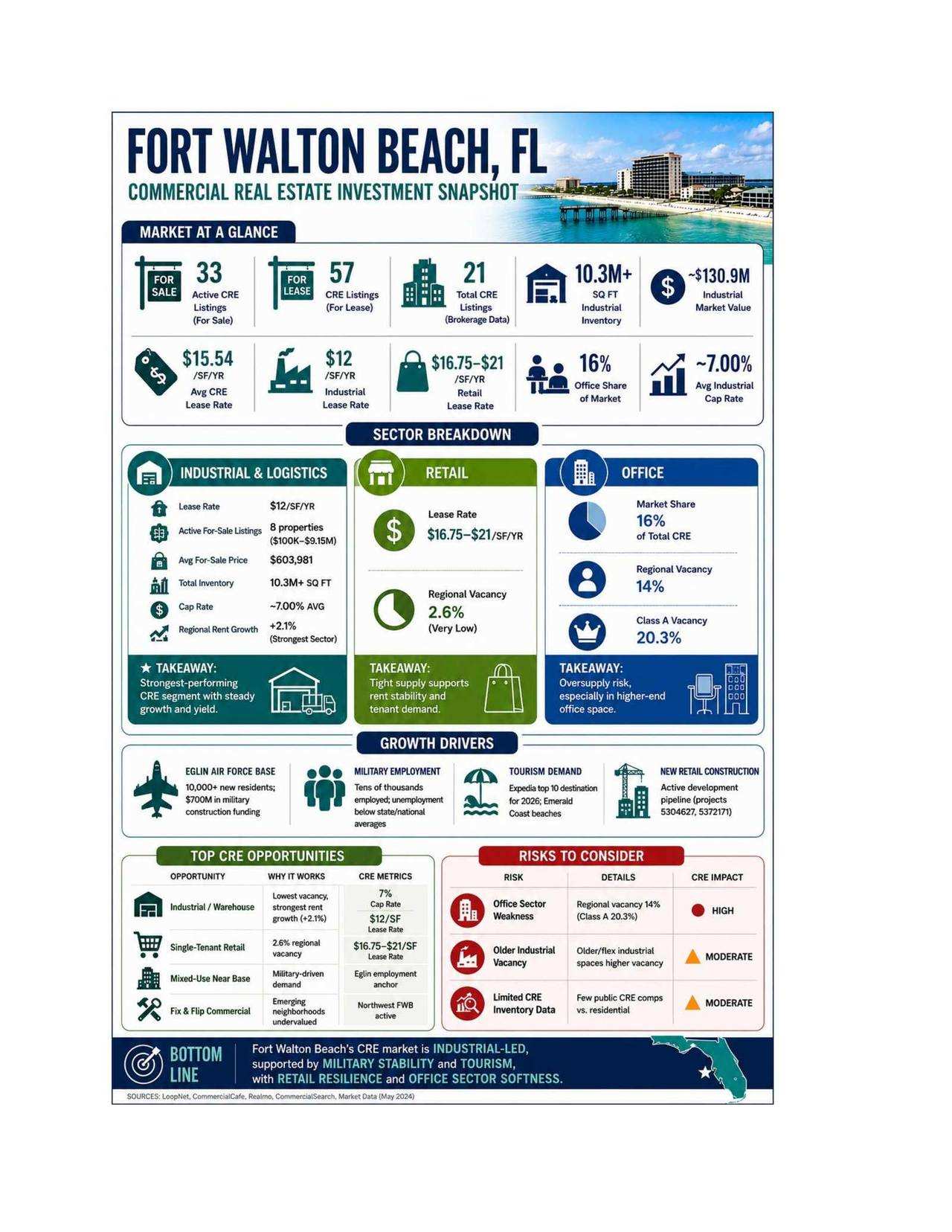
Florida's Emerald Coast isn't just attracting vacationers anymore — it's quietly becoming a commercial real estate sleeper hit.
Fort Walton Beach's CRE market is increasingly industrial-led, fueled by military employment, tourism growth, and a retail sector that's proving surprisingly resilient. Meanwhile, office? Let's just say it's still attending group therapy.
Industrial: The MVP
Industrial is carrying this market like a franchise player.
With more than 10.3M square feet of inventory, vacancy sitting around ~7%, and rent growth leading the pack at +2.1%, logistics and warehouse assets are becoming the market's most reliable performers. Add Eglin Air Force Base's economic gravity and suddenly this "small market" starts looking institutionally relevant.
Translation: tenants want space, landlords know it, and investors are paying attention.
Retail: Quietly Crushing It
Retail vacancy is sitting at just 2.6%, which in today's CRE environment is basically beachfront unicorn territory.
Lease rates between $16.75–$21/SF/YR suggest healthy tenant demand, supported by tourism, population growth, and steady consumer traffic. Single-tenant retail and mixed-use near military hubs are especially attractive as investors hunt for durable cash flow.
Retail apocalypse? Fort Walton Beach didn't get the memo.
Office: Still a Work in Progress
Office remains the soft spot.
Regional vacancy is roughly 14%, while Class A office vacancy climbs above 20%, highlighting oversupply issues in higher-end product. That said, distressed pricing and repositioning opportunities could create value-add plays for patient capital.
In other words: not dead, just complicated.
Why This Matters
Between military stability, tourism demand, and ongoing development, Fort Walton Beach is evolving into a legitimate secondary-market CRE story. Industrial leads, retail thrives, and office continues searching for its redemption arc.
Bottom Line: Smart money loves markets with growth drivers, stable demand, and less institutional competition. Fort Walton Beach may quietly check all three boxes.
Overall Takeaway
Cautious optimism: momentum is returning in rent payments and pockets of regional growth, but elevated late payments, weak small-business sentiment, and the 2026–27 maturity wall keep risks concentrated. Investors who win will underwrite conservatively, target markets with durable demand drivers, and use creative structures to bridge refinancing gaps.
Facing a Maturity This Year? Schedule a Free Consultation.
Contact us at (850) 203-5788 or submit your property details at www.gulfcoastpg.com.