Gulf Coast CRE: Trends, Transactions & Opportunities
The CRE market never really sits still — and this week is no exception. From shifting investor sentiment to changing market fundamentals, there's plenty happening across the commercial real estate landscape. We're keeping an eye on the numbers, the trends, and the signals that could shape where the market goes next. So grab your coffee and let's get into it.
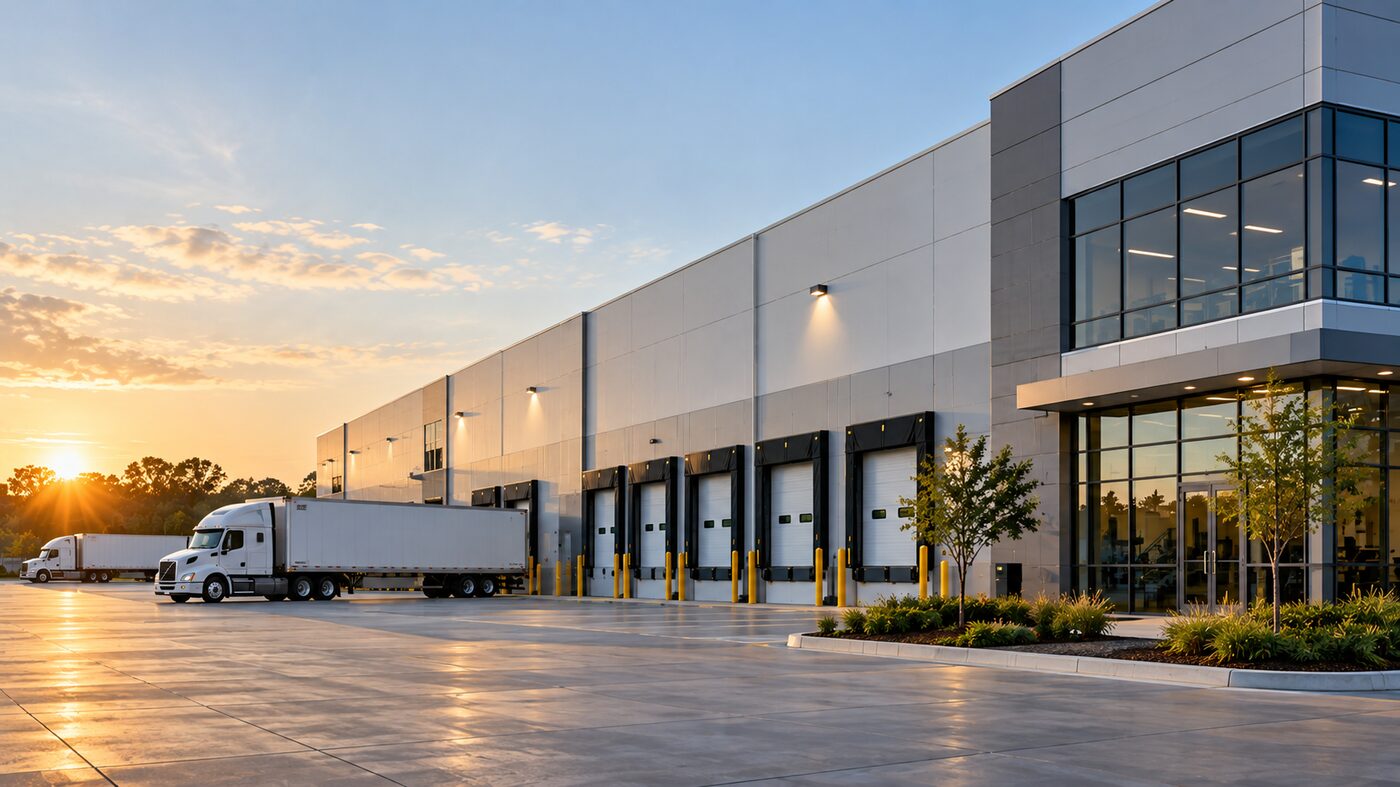
Industrial Real Estate Is Finally Finding Its Footing
After a rough post-COVID correction, the industrial market is starting to look a little less industrial-strength gloomy.
Rents Are Moving Up
National in-place industrial rents climbed 5.4% year over year to $9.25/SF in July. Atlanta led the pack with 7.9% growth, while Miami, Dallas-Fort Worth, New Jersey, the Inland Empire and Tampa also posted gains above 7%.
And supply may finally be cooperating. The massive wave of new industrial deliveries that pushed vacancies higher appears to be easing, giving demand a chance to catch up.
But Supply Still Matters
National vacancy sits at 9.3%, and the gap between markets is huge. Nashville is at just 5.5%, while the Central Valley is at 14.5%.
Meanwhile, 427.6M SF remains under construction nationwide. Phoenix alone has 30.8M SF underway — so some markets still have plenty of inventory to digest.
Investors Are Coming Back
Industrial sales reached $50.1B in July, with average pricing at $140/SF. That's another sign that capital is cautiously returning to the sector.
The takeaway: The industrial recovery is real, but it won't be evenly distributed. Markets with strong population growth, logistics infrastructure and disciplined supply could be the biggest winners.
Why This Matters
Industrial real estate may be moving from "survive the supply wave" to "pick the winners." Rising rents and improving sales are encouraging, but the national vacancy rate shows the recovery still has plenty of runway.
For investors, that makes market selection more important than ever. A metro with strong logistics demand and limited new construction could see rents accelerate as vacancies tighten. Meanwhile, markets flooded with new supply may remain a grind.
And then there's data centers. Growing demand creates a huge opportunity — but increasing community opposition means entitlements and local politics are becoming part of the underwriting equation.
In other words: the industrial rebound isn't about buying industrial. It's about buying the right industrial, in the right market, with the right supply story.
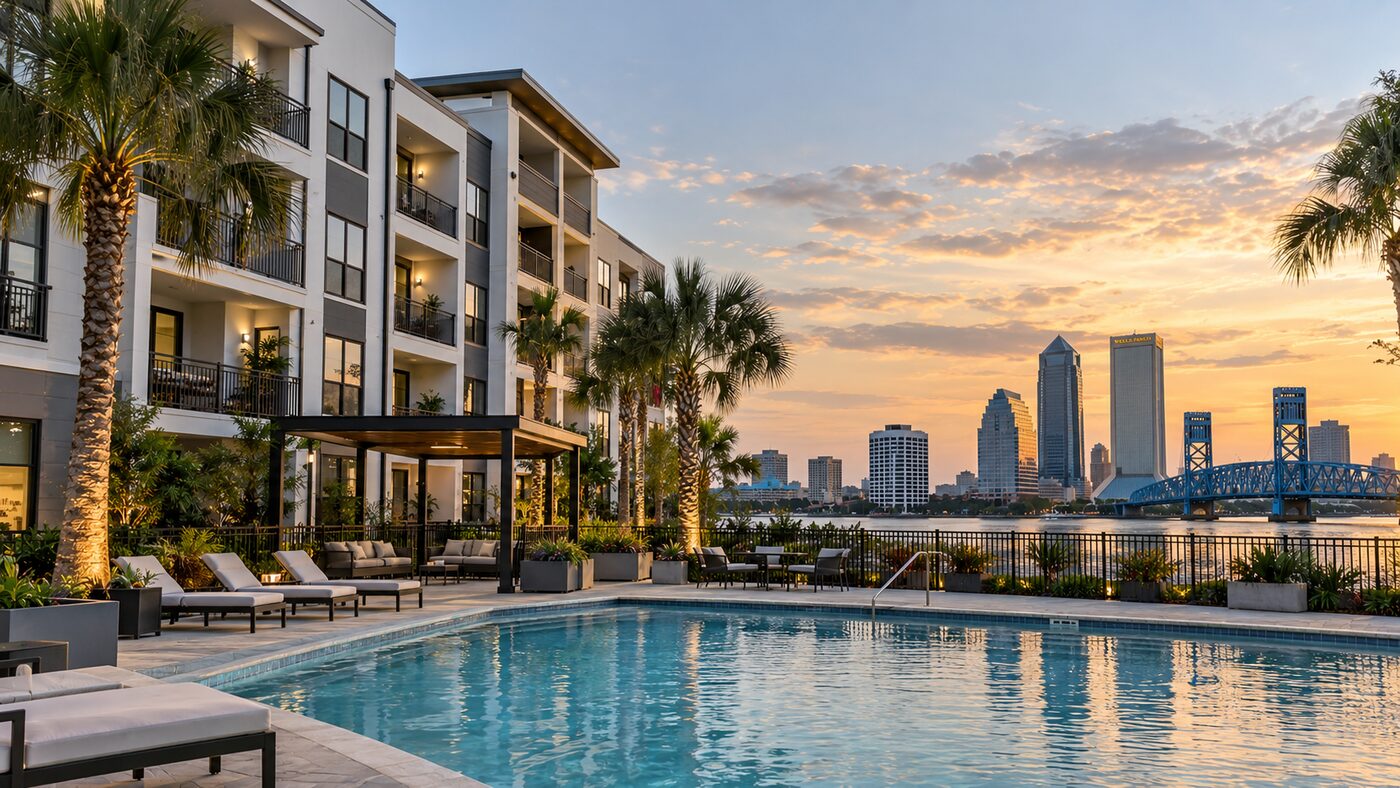
Jacksonville Multifamily Is Having a Moment
Jacksonville's apartment market just sent investors a pretty loud message: confidence is coming back.
The $1B Signal
Multifamily sales topped $1 billion over the trailing 12 months, up 20.7% year over year. Buyers are zeroing in on stabilized, well-located properties — and they're liking what they see.
The biggest catalyst? Less future supply. Units under construction fell to 3,612, down sharply from 5,480 a year earlier. With fewer deliveries ahead, investors are betting that the supply-demand equation is finally getting friendlier.
Fundamentals Are Finding Their Footing
Demand for 1,766 units outpaced new supply, while Jacksonville-wide rents slipped just 0.6%. Central Jacksonville was the standout, posting 3.8% rent growth, although Southeast Jacksonville and Northside each fell 2.9%.
Cap rates also compressed to 5.1%, with pricing around $150,000 per unit.
Occupancy did dip 30 basis points to 94.2%, so this isn't exactly a victory lap yet. Buyers remain disciplined, scrutinizing lease-up risk and operations while sellers adjust pricing expectations.
Bottom line: Jacksonville isn't booming — it's stabilizing. And for multifamily investors, that may be the more interesting story.
Why This Matters
Jacksonville's multifamily market may be shifting from "wait and see" to "time to look." Falling construction activity means less competition from new apartments, while stabilizing rents and strong demand give investors more confidence in future cash flows.
The 20.7% jump in sales volume suggests capital is already moving off the sidelines. And with cap rates at 5.1%, buyers clearly aren't chasing deals blindly — they're targeting quality assets where the fundamentals actually work.
For owners, that could mean better pricing power ahead. For investors, it's a reminder that the window to find attractive opportunities may be opening before the market fully rebounds.
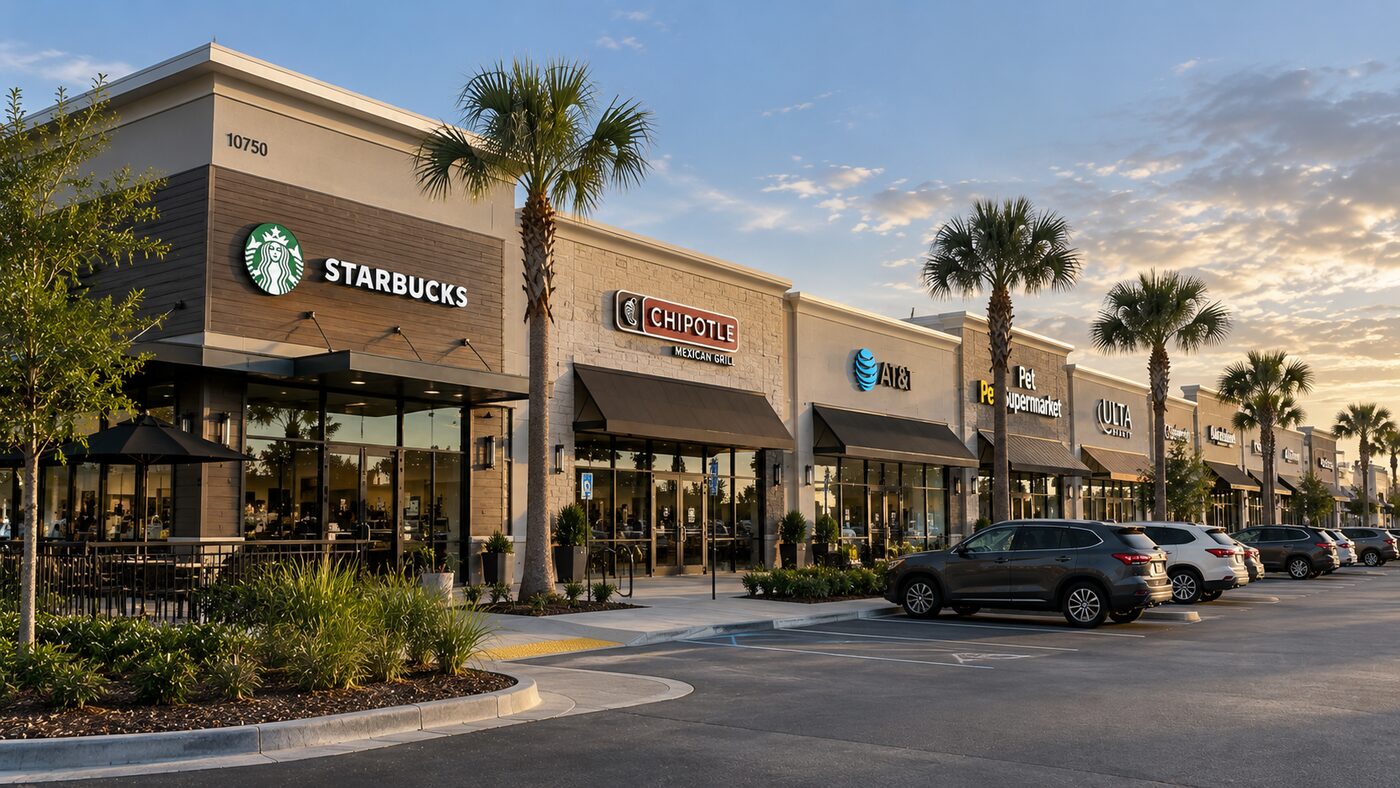
Net Lease Retail Is Splitting Into Two Camps
Higher interest rates and economic uncertainty haven't scared investors away from single-tenant net lease retail. They've just made them pickier about where they put their money.
$6.4B Says Investors Are Still Buying
Net lease retail generated $6.4 billion in sales during the first half of 2026, nearly matching the $6.5 billion from the prior six months.
The median cap rate tightened to 6.6%, while the median sale price held steady at $294/SF.
But beneath those stable numbers, the market is getting more divided. Investors are paying premium prices for properties with strong tenants, long leases and everyday demand — while deals with more tenant or operational risk are offering higher yields.
The Premium Lane
Convenience stores posted the lowest median cap rate at 5.3%, while quick-service restaurants came in at 5.7%.
Why the love? Daily-use demand, established operators, drive-thru access and predictable cash flow. Basically, investors are willing to accept a lower yield when they believe the income is really, really boring — in the best possible way.
The Higher-Yield Lane
At the other end, dollar stores and discounters traded at a 7.1% median cap rate, while drugstores reached 7.5%.
Those higher yields come with a catch: investors are taking on more uncertainty around tenants, store closures, lease durability and operating performance.
Why This Matters
Net lease retail is becoming a risk-pricing game, not a race for the highest cap rate. A 7.5% yield might look more attractive than 5.3% — until you realize you're getting paid extra because someone wants you to take on extra risk.
For investors, the sweet spot may be finding assets where the market is overpricing the risk — or underpricing the quality.
The broader retail market remains healthy, with national vacancy at just 4.4% and limited new construction supporting well-located properties.
The takeaway: quality still commands a premium. But for investors willing to do the homework, higher-yield deals could offer meaningful upside — provided the tenant, lease and location can actually back it up.
Fort Walton Beach Retail Is Keeping the Momentum Going
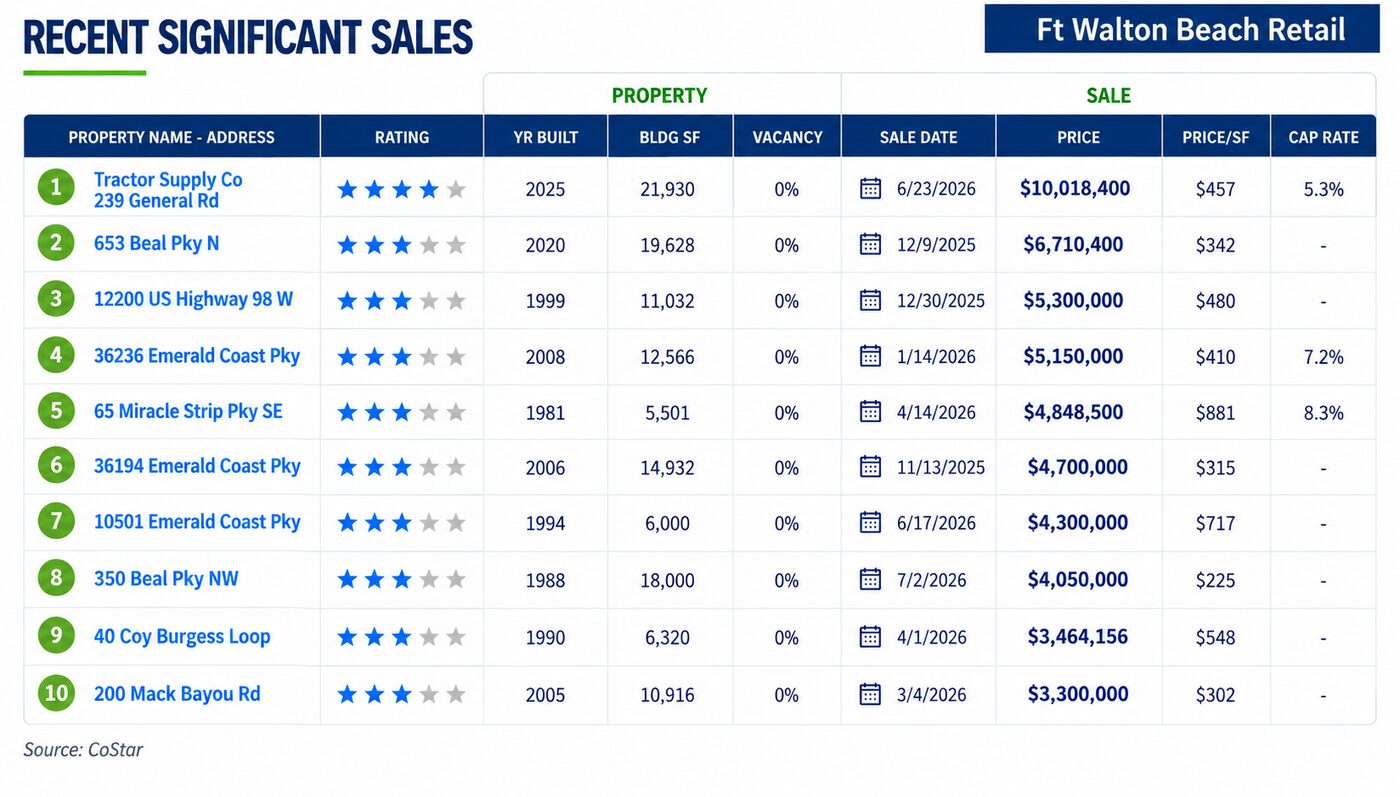
Fort Walton Beach's retail market is showing plenty of activity, with transaction volume running well above historical norms.
Sales Activity Is Up
Over the past year, 117 retail properties traded, representing approximately 630,000 SF of inventory turnover.
That's more than 3x the five-year average of 180,000 SF and over 3x the 10-year average of 190,000 SF. Retail sales volume reached $153 million, slightly above the five-year annual average of $146 million and well ahead of the 10-year average of $120 million.
Pricing Is Relatively Competitive
Estimated retail pricing in Fort Walton Beach sits at $224/SF, below the $247/SF national average.
- Neighborhood centers: $178/SF
- Power centers: $205/SF
- Strip centers: $210/SF
- Malls: $200/SF
- General retail: $250/SF
Recent Significant Sales — Fort Walton Beach Retail
Overall Takeaway
The latest numbers point to a market that is improving — but rewarding investors who are selective. Across industrial, multifamily and retail, the practical playbook is becoming clearer: look for strong demand, limited new supply, quality tenants and a compelling basis.
For industrial, that means paying close attention to local vacancy and construction pipelines rather than relying on national rent growth. Markets with strong logistics demand and less competing space may have the clearest path to further rent growth.
In Jacksonville multifamily, the shrinking construction pipeline and rising transaction volume suggest it may be time to revisit well-located, stabilized assets, particularly before supply constraints translate into stronger pricing.
For net lease retail, the numbers reinforce the importance of tenant quality and lease durability. A higher cap rate can be attractive, but only if the additional yield adequately compensates for tenant and location risk.
And in Fort Walton Beach, transaction activity is running well above historical averages while pricing remains below the national benchmark — giving investors another market where it makes sense to dig into individual opportunities rather than simply follow the biggest metros.
If you're an investor looking to explore opportunities and partner with a CRE team, we'd love to connect. Call us at (850) 203-5788 or join our investor network at Investment Partnerships.
Prepared by Gulf Coast Property Group