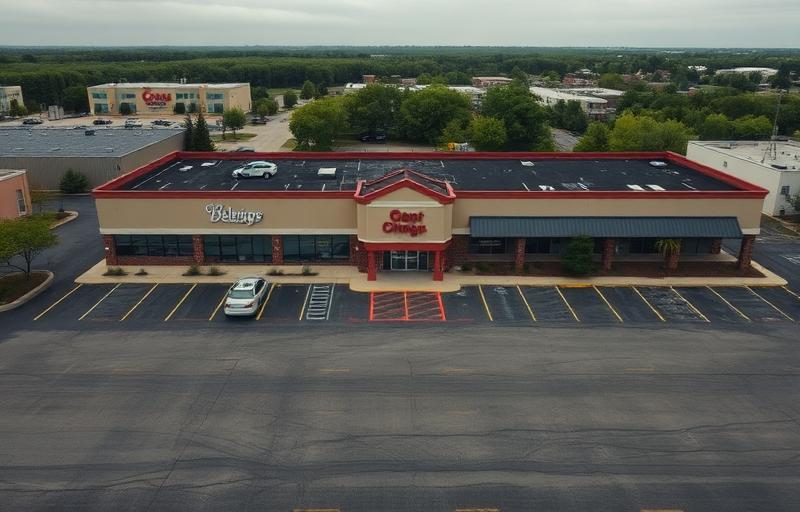
Early Warning Signs an Underperforming Commercial Property Is Becoming Financially Unviable
Owning commercial real estate can be a powerful long-term wealth strategy. However, not every asset continues to perform as planned. Market conditions shift, operating costs rise, and tenant behavior changes. When those factors stack up, an underperforming commercial property can quietly turn from an income generator into a financial liability.
Catching these signals before they escalate is essential. Knowing when to sell commercial real estate can mean the difference between exiting on your terms and absorbing losses that were entirely avoidable.
Here are the most telling, data-supported indicators that a commercial property may be approaching financial unviability — and when divestment becomes the smarter play.
1. Net Operating Income Is Declining Despite Stable Rents
Net Operating Income (NOI) is the foundational metric that lenders, appraisers, and investors use to gauge the health of a commercial asset. When rents hold steady but NOI continues to shrink, the culprit is almost always expense growth outpacing revenue.
Frequent drivers include:
- Surging insurance premiums, particularly in coastal and storm-exposed markets
- Property tax reassessments following value increases
- Mounting costs from deferred capital repairs
- Higher utility rates and property management fees
The U.S. Bureau of Labor Statistics has documented consistent year-over-year increases in commercial maintenance and repair costs through 2023–2024, outpacing rent growth across multiple property sectors.
Why it matters: Expenses that outrun income quietly erode asset value — even when occupancy figures look healthy on the surface.
2. Vacancy Rates Are Increasing Beyond Market Averages
Some vacancy is expected and manageable. But when a property's vacancy rate consistently exceeds local benchmarks, it signals something more systemic. CBRE and Moody's Analytics data from 2024 highlights that office, retail, and mixed-use assets in secondary and tertiary markets are experiencing structurally elevated vacancy compared to pre-2020 norms.
Warning indicators include:
- Extended lease-up periods between tenants
- Growing reliance on tenant improvement concessions to attract occupants
- Shorter lease terms used as an enticement
- Heavy dependence on a single anchor tenant to maintain occupancy
When filling space requires below-market rents or substantial capital giveaways, the property may have drifted well outside its original underwriting assumptions.
3. Your Debt Coverage Ratio Is Trending in the Wrong Direction
Commercial lenders typically require a Debt Coverage Ratio (DCR) of 1.20–1.25 or better. A declining DCR — driven by rising variable-rate debt costs, an approaching loan maturity, or eroding NOI — puts owners in an increasingly tight position. The result can be forced capital contributions, diminished refinancing options, or the need to carry costly interest reserves.
Federal Reserve data from the 2022–2024 rate tightening cycle confirms that older or marginally performing assets bear the heaviest burden when debt service costs rise.
Bottom line: A property that struggles to comfortably cover its debt obligations has crossed into financially fragile territory.
4. Capital Expenditure Deferrals Are Piling Up
Deferred maintenance is frequently a symptom of cash flow strain, not just an operational oversight. Postponed roof work, aging HVAC systems, outdated ADA or fire code compliance, and neglected structural or parking repairs all quietly accumulate liability.
NAIOP research has established a direct link between deferred capital investment and reduced tenant retention and lease competitiveness.
The compounding problem: Every repair that gets pushed back grows more expensive over time and signals risk to future buyers, who will price that uncertainty into their offers — often aggressively.
5. Structural Market Shifts Have Altered Demand Fundamentals
Not every slowdown is cyclical. Some commercial sectors are navigating permanent demand recalibration:
- Office absorption has structurally contracted in many markets due to the sustained adoption of hybrid and remote work
- Retail corridors continue to battle oversupply driven by the long-term expansion of e-commerce
- Coastal hospitality assets face rising insurance and operating costs that compress margins regardless of revenue performance
When a property's highest and best use is no longer aligned with where market demand is heading, continued ownership may increase downside exposure without meaningfully improving long-term upside.
6. The Asset No Longer Serves Your Investment Objectives
A property doesn't have to be distressed to become the wrong fit for your portfolio. Cash-flow-positive assets can still represent a strategic liability when:
- Time-intensive management with declining returns
- Equity is locked in a low-appreciation, low-growth asset
- Risk exposure has grown disproportionate to yield
- Better redeployment opportunities exist in stronger markets or asset classes
This is often the inflection point where owners start seriously evaluating when to sell commercial real estate — not because the asset has failed outright, but because the opportunity cost of holding it has become too significant to ignore.
When Selling an Underperforming Commercial Property Makes Sense
Selling may be the right move if:
- NOI erosion shows no sign of reversing
- Required capital investment exceeds realistic recovery projections
- Re-tenanting risk remains elevated with no near-term catalyst
- Debt pressure is limiting your operational and financial flexibility
- Current market exit conditions outperform your future hold projections
Investors who move decisively at the right moment routinely preserve more equity than those who hold through deterioration and eventually face forced sales or lender action.
How Gulf Coast Property Group Can Help
At Gulf Coast Property Group, we specialize in evaluating underperforming commercial properties and providing clear, data-driven options for owners who need certainty.
We:
- Purchase commercial assets directly for cash
- Close without financing contingencies
- Acquire properties with vacancy, deferred maintenance, or tenant complications
- Help owners avoid prolonged listing risk and carrying costs
If you're weighing when to sell commercial real estate, we'll walk through your numbers honestly and without pressure.
If your commercial property is no longer performing the way it should, waiting rarely improves the outcome. Contact Gulf Coast Property Group today at (850) 203-5788 to discuss your property, review your options, and determine whether selling now could protect your capital and reduce future risk.