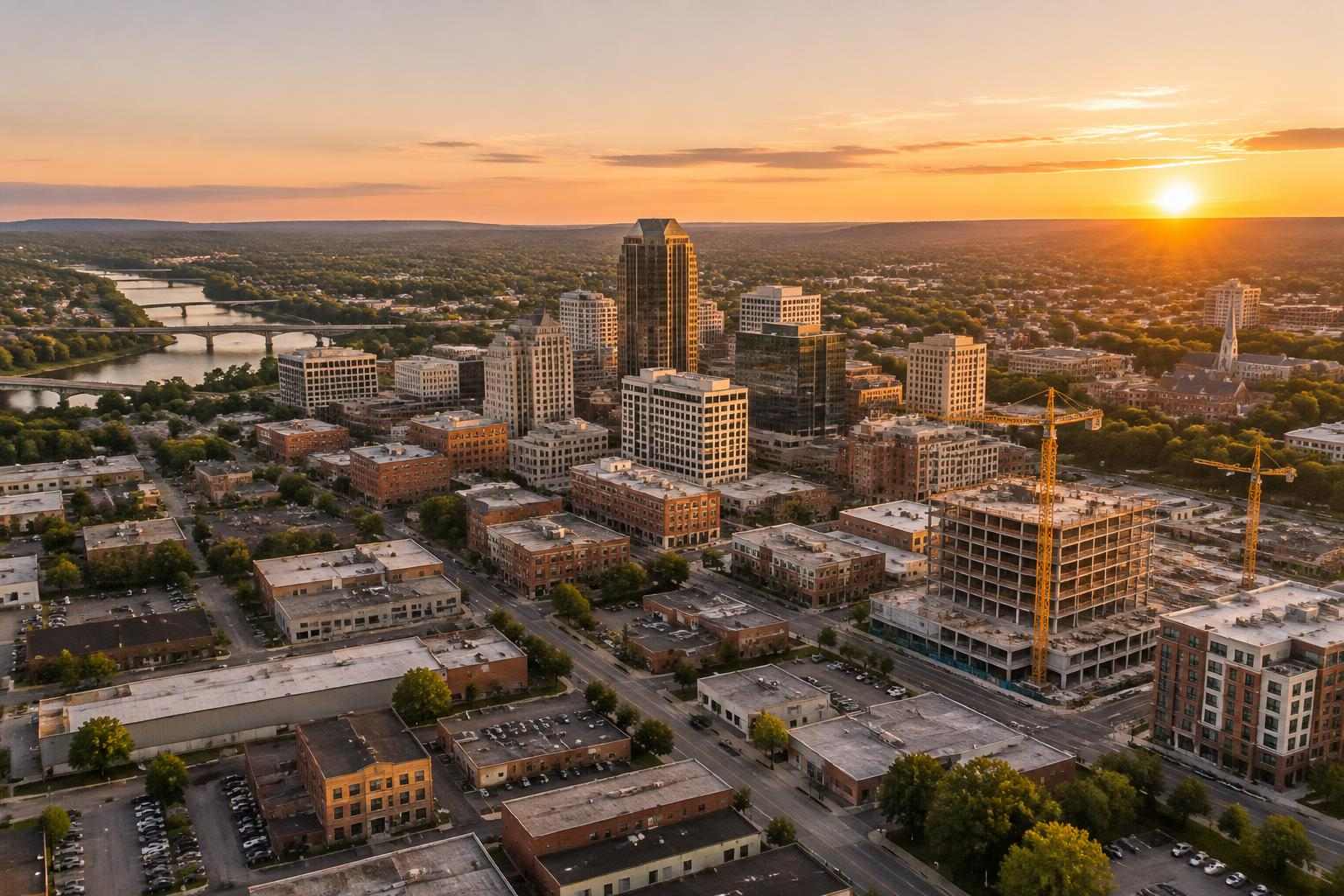
Why Secondary Markets Are Outperforming Major Gateway Cities
For years, major gateway cities such as New York, Los Angeles, San Francisco, Chicago, Boston, and Washington, D.C., dominated commercial real estate investment. These markets offered deep capital pools, major employers, global visibility, and strong liquidity.
Today, however, many investors are looking beyond the traditional core. Secondary market commercial real estate is attracting more attention because it can offer stronger yields, lower operating costs, favorable migration trends, and greater room for long-term growth.
This shift does not mean gateway cities are irrelevant. Instead, it reflects a broader change in how investors evaluate risk, growth, affordability, and cash flow.
What Are Secondary Markets?
Secondary markets are established metropolitan areas that are smaller than the largest gateway cities but still have meaningful population growth, employment bases, infrastructure, and commercial activity.
Examples may include:
- Tampa and Jacksonville, Florida.
- Raleigh-Durham, North Carolina.
- Nashville, Tennessee.
- Charlotte, North Carolina.
- Columbus, Ohio.
- Salt Lake City, Utah.
- Birmingham and Huntsville, Alabama.
- Boise, Idaho.
These markets generally have fewer institutional assets and less transaction volume than major coastal cities. However, they can provide a compelling balance between economic scale and investment upside.
According to recent industry analysis from CBRE, investors are increasingly moving toward markets where pricing is more accessible, yields are wider, and development opportunities remain available. Secondary and tertiary markets also represented a growing share of transaction activity across office, multifamily, and industrial properties.
Why Investors Are Moving Beyond Gateway Cities
1. Better relative yields
One of the most important advantages of secondary market investments is the potential for higher going-in returns.
Gateway properties often command premium pricing because investors value their liquidity, prestige, and access to major tenants. That demand can compress capitalization rates and make it more difficult to achieve attractive cash flow.
Secondary markets may offer wider cap rates because they carry additional risks, including smaller buyer pools and less liquidity. For investors with strong local knowledge and disciplined underwriting, that pricing difference can create additional income and a larger margin of safety.
The opportunity is not simply to pursue the highest cap rate. Investors should evaluate whether the property's income, tenant demand, location, and exit options justify the additional market risk.
2. Strong population and job growth
Population growth is one of the most important drivers of commercial property demand. When people relocate to a market, they need housing, healthcare, restaurants, retail, logistics, education, and professional services.
Many secondary markets have benefited from in-migration from more expensive coastal cities — a pattern documented in the United Van Lines National Movers Study and U.S. Census Bureau population data. Remote and hybrid work have also made it easier for some employees and businesses to operate outside traditional employment centers.
Florida remains especially important in this discussion. Although migration patterns have become more balanced in some areas, the state continues to attract businesses, retirees, entrepreneurs, and households seeking lifestyle advantages and employment opportunities.
This growth can support demand for:
- Multifamily housing and workforce housing.
- Grocery-anchored retail centers.
- Medical office and healthcare facilities.
- Industrial and logistics properties.
- Flex space for local and regional businesses.
- Neighborhood office and service-oriented commercial properties.
3. Lower business and development costs
Operating a business in a gateway city can be expensive. High rents, labor costs, taxes, insurance expenses, and regulatory requirements may encourage companies to consider lower-cost locations.
For commercial real estate investors, lower land and construction costs can also improve development feasibility. A project that is financially difficult in a gateway market may work in a growing secondary market because land is more affordable and tenant demand is expanding.
This creates opportunities for investors to acquire or develop commercial property before the market reaches full maturity. The key is identifying locations with real economic drivers rather than simply chasing population growth.
Florida Secondary Markets to Watch
Florida secondary markets continue to receive attention because of population growth, tourism, healthcare expansion, logistics activity, and business migration.
Tampa, Jacksonville, Orlando, Fort Myers, Sarasota, Pensacola, and the broader Northwest Florida region each have different demand profiles. For example, Jacksonville benefits from logistics, transportation, healthcare, and military-related activity. Tampa has a diversified economy supported by financial services, healthcare, technology, and population growth. We've tracked these dynamics closely in our coverage of Florida growth markets.
Smaller Florida markets may also offer attractive opportunities, particularly when they have:
- Expanding employment centers.
- Limited competing inventory.
- Strong household formation.
- New infrastructure investment.
- Consistent retail and service demand.
- Proximity to major highways, ports, airports, or military installations.
Investors should avoid treating Florida as one unified market. Local differences in insurance costs, flood exposure, construction pricing, labor availability, zoning, and tenant demand can materially affect returns.
The Commercial Real Estate Trends Behind the Shift
Several commercial real estate trends are accelerating interest in secondary markets.
First, investors are prioritizing current income and downside protection. Higher borrowing costs — shaped by Federal Reserve policy — have made speculative appreciation less reliable, increasing the importance of durable cash flow.
Second, necessity-based retail has remained attractive in many growing communities. Grocery stores, pharmacies, medical providers, fitness centers, restaurants, and personal services tend to benefit from recurring local demand.
Third, industrial and flex properties continue to appeal to investors seeking exposure to logistics, local distribution, contractors, manufacturers, and service businesses. Smaller users may not require large institutional facilities, but they can create consistent demand for well-located flex space.
Finally, office investment has become more selective. Rather than buying generic office buildings, investors are often focusing on properties with strong locations, modern layouts, medical users, government tenants, or opportunities for adaptive reuse.
Risks to Consider
Secondary markets can offer stronger returns, but they are not automatically safer or better than gateway markets.
Investors should carefully evaluate:
- Tenant concentration and lease rollover.
- Local employment diversity.
- New construction and future supply.
- Insurance availability and cost.
- Property taxes and operating expenses.
- Financing availability.
- Market liquidity and potential exit buyers.
- The accuracy of population and job-growth projections.
A high cap rate may reflect genuine risk rather than an undervalued opportunity. Strong underwriting should include conservative rent growth, realistic vacancy assumptions, replacement reserves, and multiple exit scenarios.
How to Evaluate Commercial Property Growth Markets
A practical approach is to compare markets using both quantitative and qualitative factors:
- Review population, household, and employment trends.
- Identify the industries driving local growth.
- Analyze current and planned competing supply.
- Compare rents, sales prices, and cap rates by property type.
- Study tenant demand at the submarket and corridor level.
- Assess infrastructure, insurance, taxes, and financing conditions.
- Test the investment under conservative assumptions.
The best commercial property growth markets are not necessarily the fastest-growing cities. They are markets where demand is durable, supply is manageable, and pricing still allows investors to achieve reasonable risk-adjusted returns.
The Bottom Line
Secondary market commercial real estate is outperforming major gateway cities in many investment strategies because it offers a stronger combination of yield, affordability, migration-driven demand, and growth potential.
However, success depends on selectivity. Investors should focus on specific submarkets, strong tenant demand, essential-use properties, and realistic underwriting rather than relying on broad market labels.
For investors evaluating Florida secondary markets or other emerging CRE markets, now is the time to examine local fundamentals, compare property-level opportunities, and build a strategy around durable cash flow.
Ready to identify your next commercial real estate opportunity? Contact our team today to discuss market selection, property underwriting, and commercial real estate opportunities in Florida's growth markets.