Why Flex Space Continues to Outperform Traditional Office Buildings
As businesses adapt to hybrid work, e-commerce growth, and shifting supply-chain needs, flex space commercial real estate has emerged as a resilient, high-demand asset class. Unlike traditional office buildings designed primarily for desk-based tenants, flex buildings combine light industrial functions (storage, light manufacturing, fulfillment) with office components—making them uniquely suited to today's hybrid operations. For investors and developers, flex industrial space and warehouse office space provide a hedge against market volatility while capturing multiple tenant types and income streams.
What Is Flex Space Commercial Real Estate?
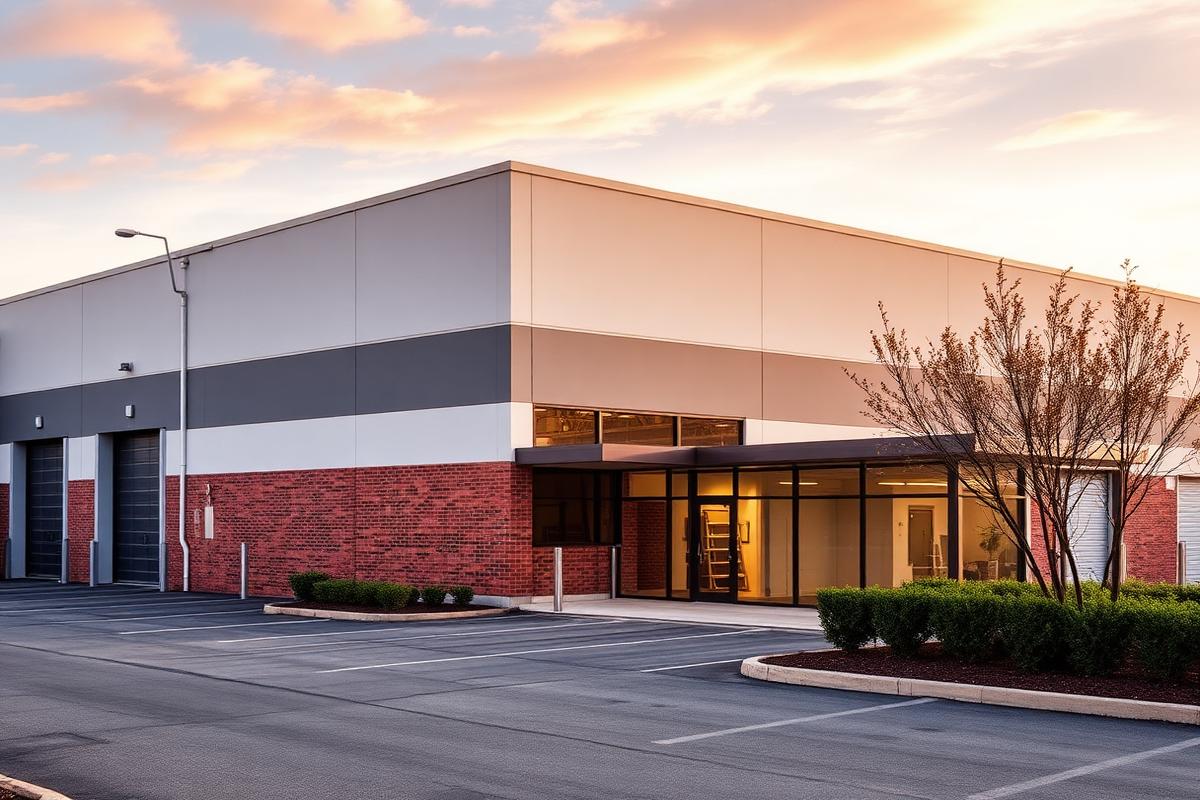
Flex space commercial real estate describes buildings that blend warehouse or light industrial area with a finished office component under one roof. A typical commercial flex building pairs clear-height warehouse bays, grade-level or dock-high doors, and a front office suite, giving a single tenant room to store, produce, ship, and administrate in one location. Because the ratio of office to industrial area can be reconfigured, the same shell serves distributors, service contractors, showrooms, labs, and creative studios — the defining trait that separates mixed-use industrial space from single-purpose office product.
Why Businesses Prefer Flex Industrial Space
Flex property investment succeeds because of adaptability. Tenants can scale operations without relocating to separate facilities. A small e-commerce brand can occupy warehouse office space for fulfillment, returns processing, and a small office footprint. A tech hardware startup might use an industrial flex property for prototyping and an attached showroom. That built-in flexibility reduces downtime and churn for landlords.
How E-Commerce Is Driving Demand for Warehouse Office Space
The rise of e-commerce has increased the need for last-mile distribution facilities and micro-fulfillment centers. Flex industrial space bridges the gap between bulky regional distribution centers and dense urban storefronts. As companies shorten supply chains and prioritize responsiveness, landlords with commercial flex buildings near population centers capture premiums for location and functionality. Our review of why small industrial properties have become one of Florida's most competitive asset classes shows the same demand pattern playing out across Gulf Coast submarkets.
Why Flex Properties Face Lower Obsolescence Risk
Traditional office stock faces structural headwinds: declining space-per-employee metrics and evolving workplace formats. Flex buildings, by contrast, are often easier to repurpose. With basic upgrades—mezzanines, dock doors, HVAC, and office fit-outs—many warehouses convert quickly to new uses. This reduces long-term vacancy and protects asset values, and it explains part of the broader shift of capital toward adaptable commercial assets.
The Investment Advantages of Commercial Flex Buildings
Stronger Income Diversification and Shorter Lease Cycles
Flex space frequently attracts a mix of tenants: local distributors, light manufacturers, creative studios, and small corporate offices. That tenant mix spreads risk across industries. Leases may be shorter or more modular than typical office 5–10 year deals, enabling rents to re-price more frequently in rising markets. For investors, that translates into potentially higher yields and faster rent-roll optimization.
Operational Efficiencies and Lower Common-Area Costs
Commercial flex buildings often have lower maintenance and operating costs per rentable square foot compared to large office towers. Parking and core services are simpler, and HVAC requirements can be compartmentalized. These efficiencies improve net operating income (NOI) and make flex property investment appealing to value-focused buyers. If you're underwriting a deal, our guide to analyzing a commercial investment property walks through the metrics that matter most.
Key Features Tenants and Investors Value
- Loading docks, grade-level doors, and clear ceiling heights for logistics.
- Flexible office build-outs that can be scaled up or down.
- Power capacity and HVAC suited to light manufacturing or tech labs.
- Proximity to transport corridors and labor pools.
- Adequate parking and truck maneuvering space.
Strategies to Maximize Returns on Industrial Flex Property
- Design for adaptability: build modular office pods, flexible mezzanines, and plug-and-play utilities.
- Target last-mile locations: small infill sites near population centers command premium rents.
- Offer short-term, retail-style leasing options to attract startups and seasonal tenants.
- Use targeted marketing: position units for omnichannel retailers, last-mile logistics providers, and light industrial users.
For a wider view of where rents and demand are heading, see our 2026 industrial real estate trends and the latest Northwest Florida commercial market report.
Case Example: A 25,000 SQFT Flex Conversion
Consider a 25,000 sqft warehouse office space in a metro-proximate business park. Split into 10 units with flexible roll-up doors and shared loading courts, the property attracts:
- An e-commerce apparel brand using 5,000 sqft for fulfillment and returns.
- A custom furniture studio using 4,000 sqft for light manufacturing and a showroom.
- Two creative agencies sharing 1,000–1,500 sqft office suites.
This mix reduces vacancy risk, increases average rent-per-sqft versus pure warehouse, and allows reconfiguration as tenants grow.
Is Flex Space Right for Your Commercial Real Estate Portfolio?
Flex space commercial real estate has moved beyond a niche product to a mainstream asset class. Its blend of warehouse office space and adaptable industrial features meets the needs of modern businesses, while delivering resilient cash flows and lower obsolescence risk for investors. As urbanization, e-commerce, and supply-chain realignment continue, industrial flex property will remain a core part of diversified CRE portfolios. Owners weighing a hold, reposition, or exit can review our commercial property valuation services to benchmark where their asset stands today.
Ready to Evaluate a Flex Property?
Whether you're assessing a flex asset or considering converting office space into a high-performing industrial flex property, our team can help. Contact us for a free valuation or submit your property for review.
Call (850) 203-5788